
Article: Business Casual vs Formal — What's the Difference & How to Dress | The Manatomy
Business Casual vs Formal — What's the Difference & How to Dress | The Manatomy
Business Casual vs Formal: What's the Difference & How to Dress
"Business casual" is the most misread phrase on any invite or dress code memo. Some men treat it as an excuse to wear a t-shirt with sneakers; others panic and show up in a full suit. Both miss the point — and both stand out for the wrong reasons.
The confusion usually comes from treating business casual vs formal as a spectrum with no clear rules, when really, each has a specific job to do. This guide breaks down exactly what separates the two, and points to real pieces — not just generic advice — for putting together business casual outfits for men and formal outfit ideas for men without overthinking it.
Formal Wear Exists to Remove Doubt
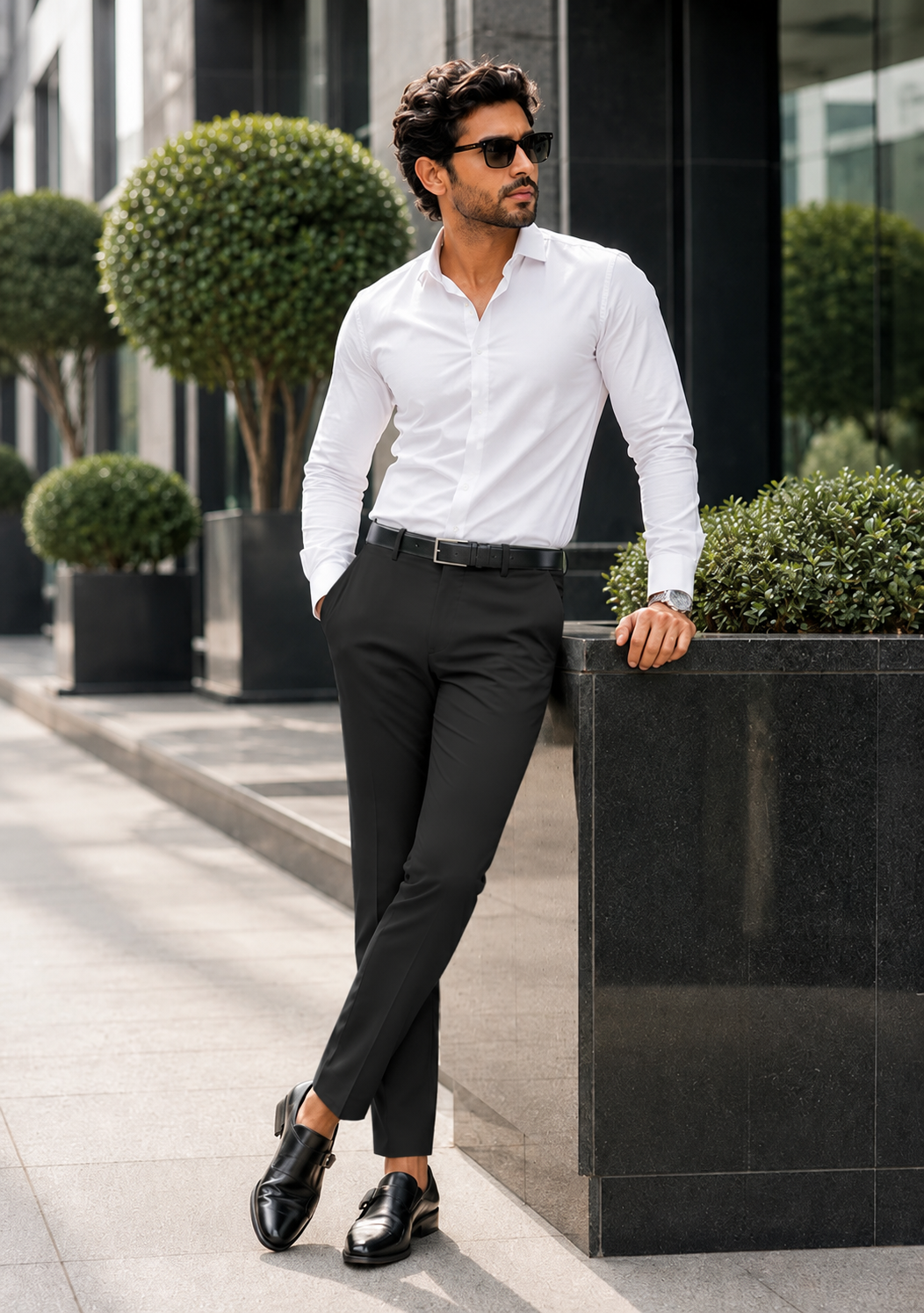
Formal attire has one purpose: to signal that you take the occasion seriously, with zero ambiguity. Think board meetings, client pitches, interviews, or formal dinners — settings where the outfit isn't supposed to say anything interesting about you personally. It's supposed to say "I understand the stakes here."
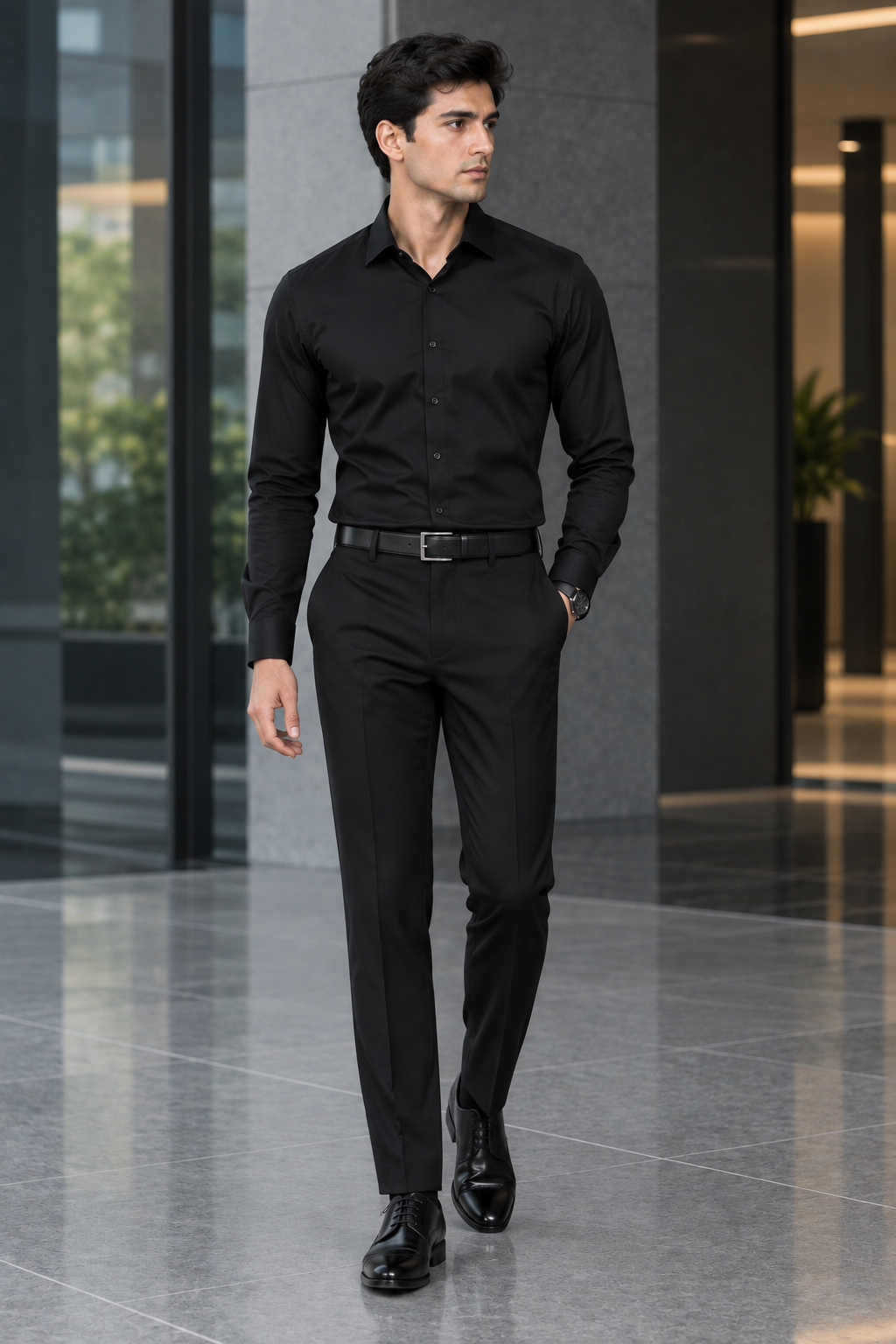
That translates to a structured, well-fitted shirt in white or steel blue, paired with tailored trousers in black or charcoal grey. A blazer often comes standard in more traditional workplaces, along with a tie. Shoes are always closed, polished leather — nothing casual sneaks in, not even in the footwear.

For this, a Crisp White Full Sleeve Versatile Shirt or a Jet Black Full Sleeve Versatile Shirt paired with the UltraEase 4-Way Stretch Jet Black Pant covers almost every formal scenario. Finish it with the Black Legacy Premium Italian Leather Shoes — or grab the Legacy Combo Black Shoes & Belt so the leather tone matches head to toe without extra guesswork.

Where it belongs: interviews, board meetings, formal client pitches, official dinners (If you're prepping for one specifically, our complete interview outfit guide breaks this down step by step.)
Business Casual Is a Controlled Kind of Relaxed
Business casual isn't "casual with a blazer thrown on" — it's a specific register that keeps you looking professional while dropping the stiffness of full formal wear. It exists for workplaces and situations where being approachable matters as much as looking competent: daily office wear, casual Fridays, informal client meetings, work lunches.
The formula is a well-fitted shirt in a softer tone — grey, brown, or muted teal — paired with stretch-fabric trousers rather than strictly formal ones. No tie required, sleeves can be rolled up, and loafers replace the strictly formal lace-up.

A Pearl Grey Full Sleeve Versatile Shirt or Camel Brown Full Sleeve Versatile Shirt paired with the UltraEase 4-Way Stretch Deep Beige Pant or UltraEase 4-Way Stretch Roman Grey Pant sits right in this zone — polished enough for the office, relaxed enough for a lunch after. Round it off with the Brown Legacy Premium Italian Leather Shoes or the Prestige Cap Toe Brown Shoes for a slightly dressier finish.
Where it belongs: daily office wear, casual Fridays, informal meetings, work lunches (If your office runs warm, our guide on breathable formal wear for summer pairs well with this section.)
The Line That Actually Separates Them
If you strip away the jargon, the real difference between business casual and formal wear comes down to three things:
-
Structure — formal wear is tailored and closed; business casual allows for softer, more relaxed fits
-
Colour range — formal sticks to neutrals (white, black, navy, charcoal); business casual opens up to grey, beige, brown, and muted tones
-
Finishing details — a tie, blazer, and fully closed formal shoes signal formal; their absence signals business casual
A useful shortcut: if you'd feel comfortable rolling up your sleeves and skipping the tie, you're in business casual territory. If removing either would feel like something's missing, you're dressed formal.
Building a Business Casual Outfit That Works
A dependable business casual outfits for men formula:
-
Shirt: Pearl Grey, Clear Grey, or Deep Teal full sleeve
-
Trouser: Deep Beige or Sage Green stretch pant
-
Footwear: Prestige Cap Toe Brown Shoes or a matching combo
-
Extras: no tie needed; keep it simple
This combination holds up through a full workday and doesn't feel like you're trying too hard for an office lunch. Browse the full range under Topwear and Bottomwear to mix your own.
Building a Formal Outfit That Works
For formal outfit ideas for men that never miss, keep the formula tight:

-
Shirt: Crisp White or Steel Blue full sleeve, wrinkle-free
-
Trouser: Jet Black or Steel Grey stretch pant
-
Footwear: Black Legacy Premium Italian Leather Shoes, matched belt
-
Extras: blazer for board meetings and interviews; tie if the workplace culture expects one
The fewer decisions you have to make within this formula, the safer you are — formal wear rewards consistency, not creativity. If you'd rather not mix and match, the Legacy Combo Black Shoes or Prestige Cap Toe Combo Black Shoes & Belt takes that decision off your plate entirely — or check the full Combo range for shirt-pant-shoe sets built to go together.
When the Dress Code Doesn't Say Which One

If an invite or workplace memo doesn't specify, default one level up rather than down — a slightly more formal business casual outfit is far less noticeable than an outfit that reads as underdressed. A structured shirt like Terracotta Rust with a Stone Blue stretch pant sits safely in the middle and adjusts easily either way: add a blazer to push it toward formal, or roll the sleeves to pull it back to casual.
Quick Reference: Business Casual vs Formal
|
Element |
Business Casual |
Formal |
|
Shirt colour |
Grey, brown, muted teal |
White, steel blue |
|
Trouser |
Beige, sage green, stone blue stretch pants |
Jet black, steel grey stretch pants |
|
Footwear |
Prestige Cap Toe (brown) |
Legacy Premium Italian Leather (black) |
|
Blazer |
Optional |
Often expected |
|
Tie |
Not required |
Workplace-dependent |
|
Best for |
Daily office wear, casual Fridays |
Interviews, board meetings, formal events |
Common Questions
What is the difference between business casual and formal wear? Formal wear is fully structured and neutral-toned, built to remove any ambiguity in high-stakes settings. Business casual keeps a professional shirt-and-trouser base but relaxes the fit, colour range, and finishing details like ties and blazers.
Can I wear the same stretch pants for both business casual and formal? Yes, if you choose the right colour — a Jet Black or Steel Grey pant leans formal, while Deep Beige or Sage Green reads business casual. The 4-way stretch fabric works for both either way.
Is a blazer required for business casual? No. A blazer is optional in business casual and can be added to dress the outfit up slightly, but the look holds up fine without one.
What should I wear if I'm unsure of the dress code? Default one notch more formal than you think is needed. It's easier to roll up your sleeves and loosen an outfit than to look underdressed in a room full of formal attire.
Build both ends of your wardrobe at The Manatomy — explore Topwear, Bottomwear, and Shoes & Accessories to put together your own business casual and formal rotation.