
Article: Formal Wear for a Job Interview: Complete Outfit Guide | The Manatomy
Formal Wear for a Job Interview: Complete Outfit Guide | The Manatomy
Formal Wear for a Job Interview: Complete Outfit Guide
You don't get a second chance to make a first impression, and in an interview, that impression starts before you say a word. Research consistently shows that over half of communication is non-verbal — which means your interview outfit, your posture, and your overall presentation are doing real work in the room before your answers even get evaluated. The good news: dressing right for a job interview isn't about owning an expensive wardrobe or a designer suit. It's about understanding a handful of rules around formal interview attire that almost never fail, regardless of industry, city, or role.
This guide walks through exactly what to wear for an interview — from shirt colour and trouser fit to shoes, belts, and the small grooming details that quietly influence how put-together you appear.
Why Your Interview Outfit Matters More Than You Think
It's tempting to think interview success comes down entirely to your answers and experience. In practice, hiring managers form snap judgments within the first few seconds of meeting a candidate, and clothing is one of the fastest signals of preparation, self-respect, and cultural fit. A well-chosen job interview outfit for men doesn't guarantee an offer, but a poorly chosen one can absolutely work against you before the conversation even starts — it can read as a lack of research, low effort, or simply not understanding the role you're applying for.

Step 1: Know Which Dress Code You're Walking Into
Not every interview calls for the same level of formality, and overdressing or underdressing both send a subtle signal that you didn't research the company's culture. Interview dress code for men generally falls into three broad categories:
-
Formal / Business Professional — corporate, banking, legal, government, and consulting roles: a full suit or blazer, a conservative formal shirt colour, a subtle tie if appropriate, and polished leather dress shoes.
-
Business Casual — most modern corporate offices, client-facing roles, and mid-sized companies: a sharp formal shirt and tailored trousers, often without a jacket required. This is where the majority of professional interview outfits for men in India actually land today.
-
Casual — startups, creative agencies, retail, and hands-on or blue-collar positions: still neat, ironed, and intentional, but a full suit here can actually work against you by signalling you don't understand the environment or aren't prepared to get involved directly in the work.
When you're genuinely unsure which category applies, it's safer to dress one level more formal than the company's everyday dress code. You can always loosen up — remove a jacket, skip a tie — but you can't manufacture formality you didn't bring with you.
Step 2: Get the Shirt Colour Right
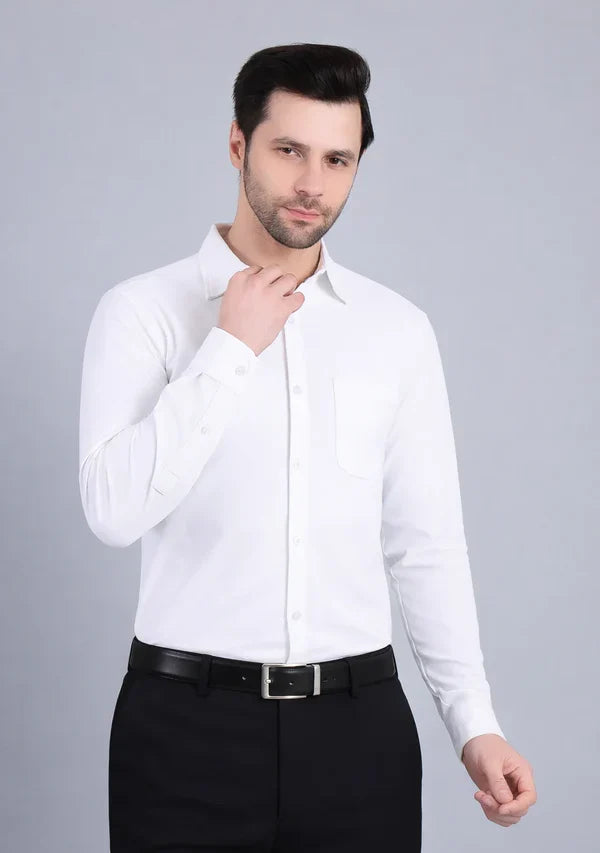
Every major styling guide agrees on this point without exception: white and light blue are the safest, most universally recommended interview shirt colours for men. They read as clean, professional, and put-together across virtually every industry and cultural context — and practically speaking, lighter shirt colours are more forgiving if interview nerves cause any visible perspiration. Light pink and light grey formal shirts are solid secondary options if you want something slightly less predictable while staying equally safe and interview-appropriate.
Avoid bold patterns, bright or saturated colours, and busy prints for a formal interview — the objective is for the interviewer to remember your answers and your composure, not your shirt. Fabric quality matters here too: a formal shirt that wrinkles the moment you sit down undoes a sharp first impression within minutes, which is exactly why wrinkle-resistant, breathable fabric has become such a practical consideration for interview dressing, not just a comfort preference.
Step 3: Choose Navy, Grey, or Black Trousers
Formal trousers for an interview should be tailored, not baggy, and completely free of visible creasing by the time you walk in. Navy and charcoal grey are the most recommended interview trouser colours across nearly every professional styling guide — versatile, universally professional, and safe across every industry and dress code level. Black trousers work as well, though several guides note black can read as marginally more formal than necessary for business-casual interview settings specifically, so reserve it for corporate or formal-tier interviews where the extra polish is expected.
Fit matters just as much as colour. Trousers should sit comfortably at the waist without gaping, and ideally break cleanly at the shoe rather than pooling around the ankle — a detail that instantly signals attention to fit and tailoring, even in an off-the-rack formal pant.
Step 4: Match Your Belt and Shoes
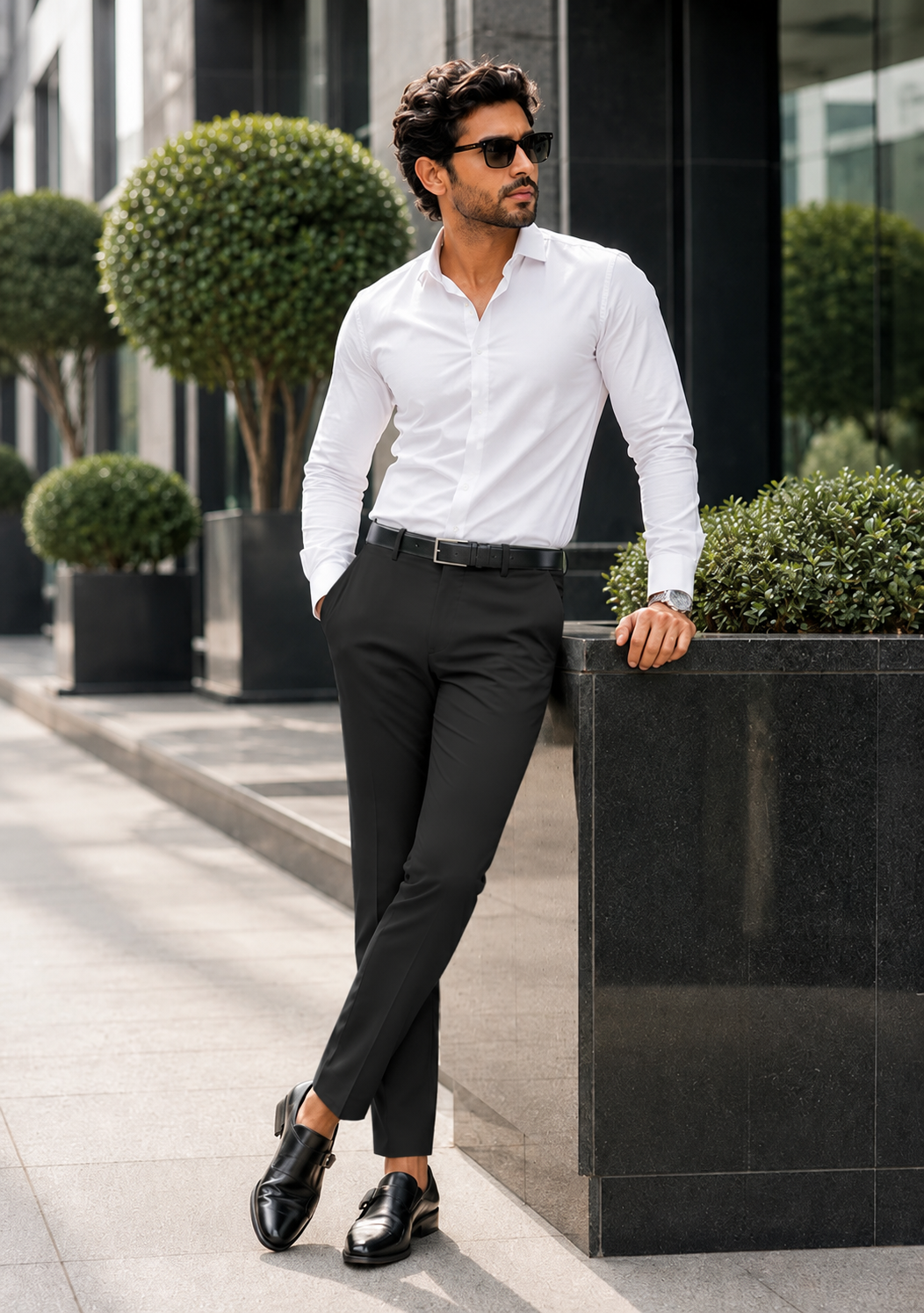
This is the detail most men get wrong under interview pressure, and it's one of the fastest ways an otherwise sharp formal outfit can look careless. Black shoes should always pair with a black belt; brown or tan shoes should always pair with a brown belt — never mix the two for a formal interview look. Oxfords or Derbys in black remain the safest, most conservative choice for formal interview attire; loafers or brogues are acceptable for business-casual interview settings. Whatever style you choose, make sure your formal shoes are clean, polished, and free of visible scuffing — worn-looking footwear undercuts a well-put-together outfit faster than almost any other single detail.
Step 5: Keep Accessories and Grooming Minimal
A simple, classic watch is the one accessory nearly every interview styling guide recommends without hesitation. Skip flashy jewellery, oversized watches, or multiple rings — the goal behind every choice in a formal interview outfit is to look intentional and composed, not distracting. The same principle extends to grooming: neatly trimmed nails, tidy facial hair, and a well-ironed shirt collar all reinforce the same message your outfit is already sending — that you took this seriously and prepared accordingly.
Interview Dress Code Quick Reference
|
Interview Type |
Shirt |
Trousers |
Shoes |
|
Formal / Business Professional |
White or light blue formal shirt |
Charcoal grey, navy, or black tailored trousers |
Black Oxfords or Derbys |
|
Business Casual |
White, light blue, or light pink formal shirt |
Navy or charcoal grey trousers |
Black or brown Derbys or loafers |
|
Casual / Startup / Creative |
Neat, solid-colour shirt (tie optional) |
Chinos in navy, khaki, or grey |
Clean loafers or minimal leather shoes |
Interview Outfit Checklist
|
Do |
Avoid |
|
White, light blue, or light pink formal shirt |
Bold patterns or bright, saturated colours |
|
Navy, charcoal, or black tailored trousers |
Baggy or visibly wrinkled trousers |
|
Black or brown formal shoes matched to belt colour |
Mismatched belt and shoe colours |
|
Clean, polished footwear |
Scuffed or worn-looking shoes |
|
One simple, classic watch |
Flashy jewellery or multiple accessories |
|
Wrinkle-resistant, breathable fabric |
Stiff fabric that creases during the commute |
|
One level more formal than the everyday dress code |
Guessing and hoping it works out |
The Fastest Way to Get This Right
If you'd rather not build a formal interview outfit piece by piece, our Signature Combo collection includes several pre-matched shirt-and-pant pairings built for exactly this kind of high-stakes professional dressing:
-
White Shirt + Black Pant — the single safest, most recommended formal interview combination across every major styling guide

-
White Shirt + Grey Pant — a softer, equally professional alternative for business-casual interview settings
-
Navy Blue Shirt + Light Grey Pant — a confident step beyond plain white without sacrificing formality

-
Black Shirt + Light Grey Pant — sharper, for formal corporate and senior-level interviews

-
White Shirt + Navy Pant — the classic, universally recommended pairing

Every combo uses wrinkle-free, breathable, 4-way stretch fabric, so the formal wear that leaves your house pressed and sharp stays that way through a hot commute, a long wait in reception, or an interview that runs longer than expected — genuinely useful when you can't afford to walk in already creased or visibly uncomfortable.
FAQs: Formal Wear for a Job Interview
Q1. What is the safest shirt colour to wear to an interview?
White is the single safest, most universally recommended interview shirt colour for men, followed closely by light blue — both read as clean, professional, and composed across virtually every industry and interview type.
Q2. Do I need a full suit for every interview?
No. A full suit or blazer is expected for formal, corporate, and business-professional roles, but for business-casual or creative industries, a sharp formal shirt and well-tailored trousers without a jacket is often more appropriate and better aligned with the company culture.
Q3. What colour trousers should I wear to an interview?
Navy or charcoal grey are the most recommended, versatile trouser colours for a job interview. Black is acceptable but can read as slightly more formal than necessary for business-casual interview settings specifically.
Q4. Should my belt match my shoes for an interview?
Yes — this is a non-negotiable styling rule for formal interview attire. Black shoes should always be paired with a black belt, and brown or tan shoes with a brown belt, never mixed.
Q5. Is it better to overdress or underdress for an interview?
Overdressing slightly is generally the safer choice for a job interview — being one level more formal than the company's everyday dress code signals preparation and respect for the process, while being underdressed can suggest the opposite.