
How to Pick the Right Formal Shirt Colour for Your Skin Undertone
You and a colleague buy the same navy shirt. On him it looks sharp. On you it looks a little tired, and you can't say why. The fit is fine, the fabric is fine, and the shirt is clean and pressed. The colour is simply fighting your undertone.
Most shirt-colour advice stops at skin tone: fair, wheatish, dusky. That matters, but it's only half the picture. Undertone is the other half. It's why two men with the same skin depth can suit completely different shirts, and why a "safe" colour sometimes still looks off.
Choosing by undertone also takes the guesswork out of buying. Once you know whether you lean warm, cool or neutral, you can look at a rack of twenty shirts and quickly narrow it down to the five that will work for you.

In this guide you'll learn:
-
The difference between skin tone and undertone
-
Four easy tests to find your undertone at home
-
Which formal shirt colours suit warm, cool and neutral undertones
-
How skin depth changes the answer
-
A sample five-shirt rotation for each undertone
-
The most common mistakes men make when choosing shirt colours
Why Undertone Matters More for Formal Shirts Than You Think
Undertone matters for any clothing, but it matters most for the formal shirt, for three reasons.
1. The collar sits right next to your face. In a formal outfit, the shirt is usually the largest block of colour near your face. The pants and shoes are far away. The shirt colour is what reflects onto your skin.
2. Office lighting is unforgiving. Fluorescent and LED office lights, and laptop webcams, can exaggerate a sallow or flushed look. A colour that suits your undertone helps balance it. A colour that clashes can make it worse.
3. You wear formal shirts constantly. A festive kurta is worn a few times a year. A formal shirt is worn several days a week, in interviews, client meetings and long lunches. Getting the colour right pays off far more often.
Skin Tone vs Undertone: What's the Difference?
People use the two terms interchangeably, but they describe different things.
|
Skin Tone |
Undertone |
|
|
What it is |
The surface depth of your skin |
The subtle colour beneath the surface |
|
Examples |
Fair, wheatish, medium, deep |
Warm, cool, neutral |
|
Does a tan change it? |
Yes |
No |
|
Why it matters |
Decides how much contrast a colour creates |
Decides whether a colour suits you or clashes |
There are three undertones:
-
Warm: a golden, yellow or peachy cast
-
Cool: a pink, rosy or slightly bluish cast
-
Neutral: a mix of both, with neither clearly winning
Shirt colours either echo your undertone or clash with it. That's why one shirt looks fresh on you and another makes you look washed out.
5 Myths About Undertone (and What's Actually True)
Myth 1: "Fair skin is cool and dark skin is warm."
Depth and undertone are separate things. A fair man can have a warm undertone, and a deeper-skinned man can have a cool one.
Myth 2: "All Indian skin is warm."
Many Indian men lean warm or olive-neutral, but cool and neutral undertones are common too. Test yours rather than assuming.
Myth 3: "A tan changes your undertone."
A tan changes your skin tone. Your undertone stays the same.
Myth 4: "Colour analysis is only for women."
The same principles apply to everyone, and they work especially well for men's formal wear because the palette is smaller.
Myth 5: "If you're neutral, anything works."
Neutral gives you the widest range, but skin depth and occasion still matter.
4 Ways to Find Your Undertone at Home
Do these in natural daylight, near a window. Indoor lighting skews every result.
1. The vein test.
Look at the inside of your wrist. Greenish veins suggest a warm undertone. Blue or purple veins suggest cool. If you can't decide, you're probably neutral. This works best on lighter to medium skin. On deeper skin the veins are hard to see, so lean on the other tests.
2. The jewellery test.
Hold something gold and something silver against your skin. If gold looks richer on you, you're likely warm. If silver looks cleaner and sharper, you're likely cool. If both work, you're likely neutral.
3. The white vs cream test.
Hold a bright white shirt under your chin, then a cream or beige one. If bright white makes your face look clearer and fresher, that points to cool. If cream makes you look healthier and warmer, that points to warm.
4. The mirror test.
Hold a few shirts you already own up to your face. Notice which ones make you look rested and which make you look tired. That reaction is your undertone responding.
Putting your results together:
|
Test |
Warm result |
Cool result |
Neutral result |
|
Veins |
Look greenish |
Look blue or purple |
Look both |
|
Jewellery |
Gold looks better |
Silver looks better |
Both work |
|
White vs cream |
Cream flatters |
Bright white flatters |
Both work |
|
Mirror |
Earthy shades look healthy |
Blues and jewel tones look sharp |
Most colours work |
No single test is perfect. If your results split, you're probably neutral, which is good news.
Warm Undertones: Earthy, Rich and Golden
Warm undertones suit colours that carry some yellow or red in them. Think of soil, spice and autumn leaves.
Shirt colours that tend to flatter:

-
Terracotta Rust, the clearest warm colour in the range

-
Camel Brown, a rich neutral that sits close to warm skin without blending in
-
Ripe Olive, a warm green that stays office-appropriate
-
Coffee Brown, Bright Mango, Light Salmon (half sleeve) and Beige also sit in this family
Three outfit ideas for warm undertones:
-
Terracotta Rust shirt with Jet Black pants for a warm-cool contrast that looks sharp in daylight
-
Camel Brown shirt with Steel Grey pants for a polished business-casual look
-
Ripe Olive shirt with Deep Beige pants for a relaxed, earthy look
Go carefully with: very icy pastels such as Pastel Blue and Lazy Lavender. On some warm complexions they can look cold or leave the skin looking dull. They're not off-limits, just test them first.
Styling tips:
-
Gold or brass-toned watches and brown leather shoes echo the same warmth.
-
If you're warm and fair, Beige can blend into your skin. Pair it with a darker pant such as black or charcoal for contrast.
Cool Undertones: Clean, Crisp and Jewel-Toned
Cool undertones suit colours with a blue or purple base. These tend to look sharp against pink or rosy skin.
Shirt colours that tend to flatter:

-
Steel Blue, a cool, muted blue that's easy to wear

-
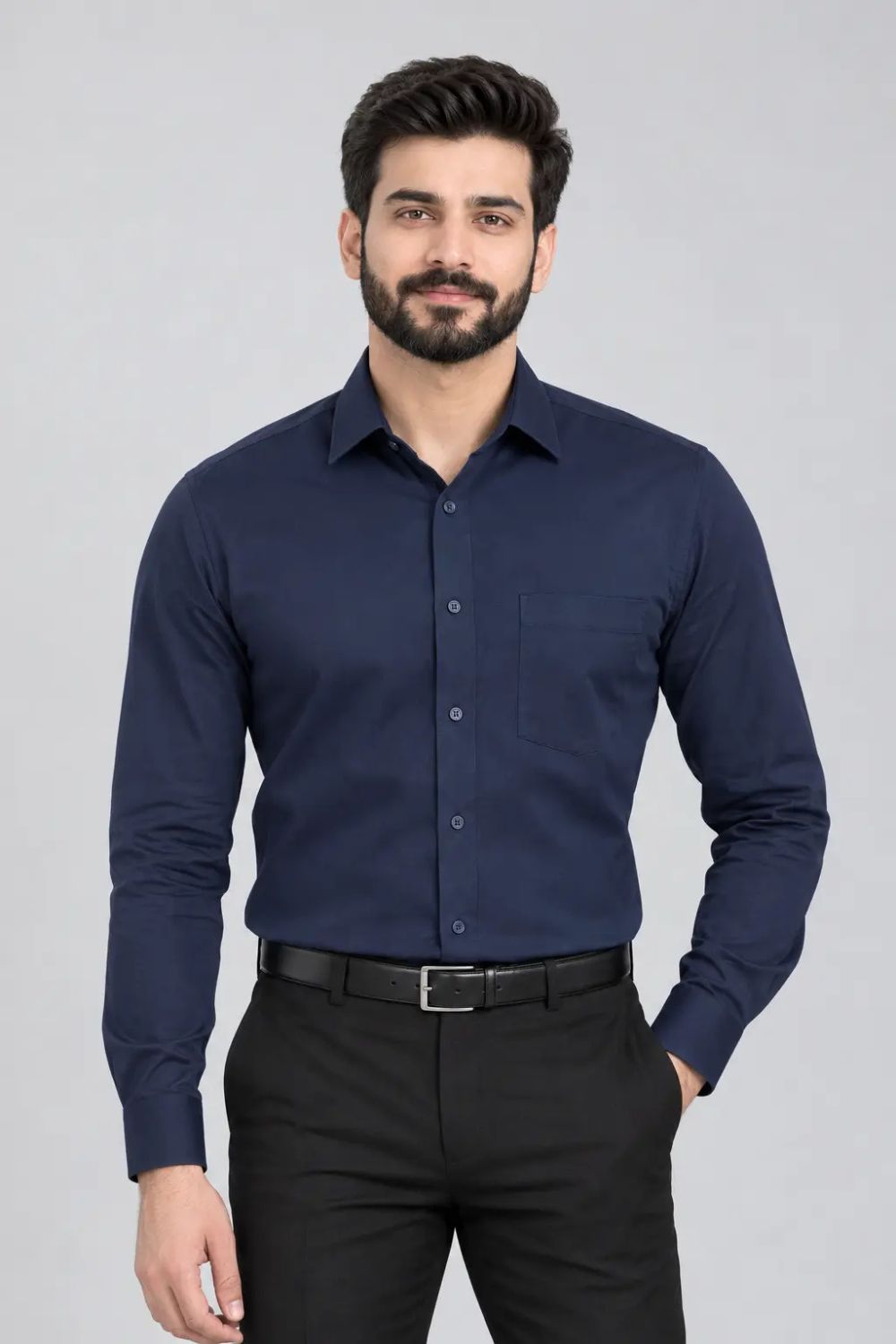
True Navy, a deep colour that's good for interviews
-
Berry Wine, a wine with a purple lean and strong evening presence
-
Pearl Grey, Clear Grey, Pastel Blue, Lazy Lavender and Deep Teal also work well here
Three outfit ideas for cool undertones:
-
Steel Blue shirt with black pants for a classic boardroom look
-
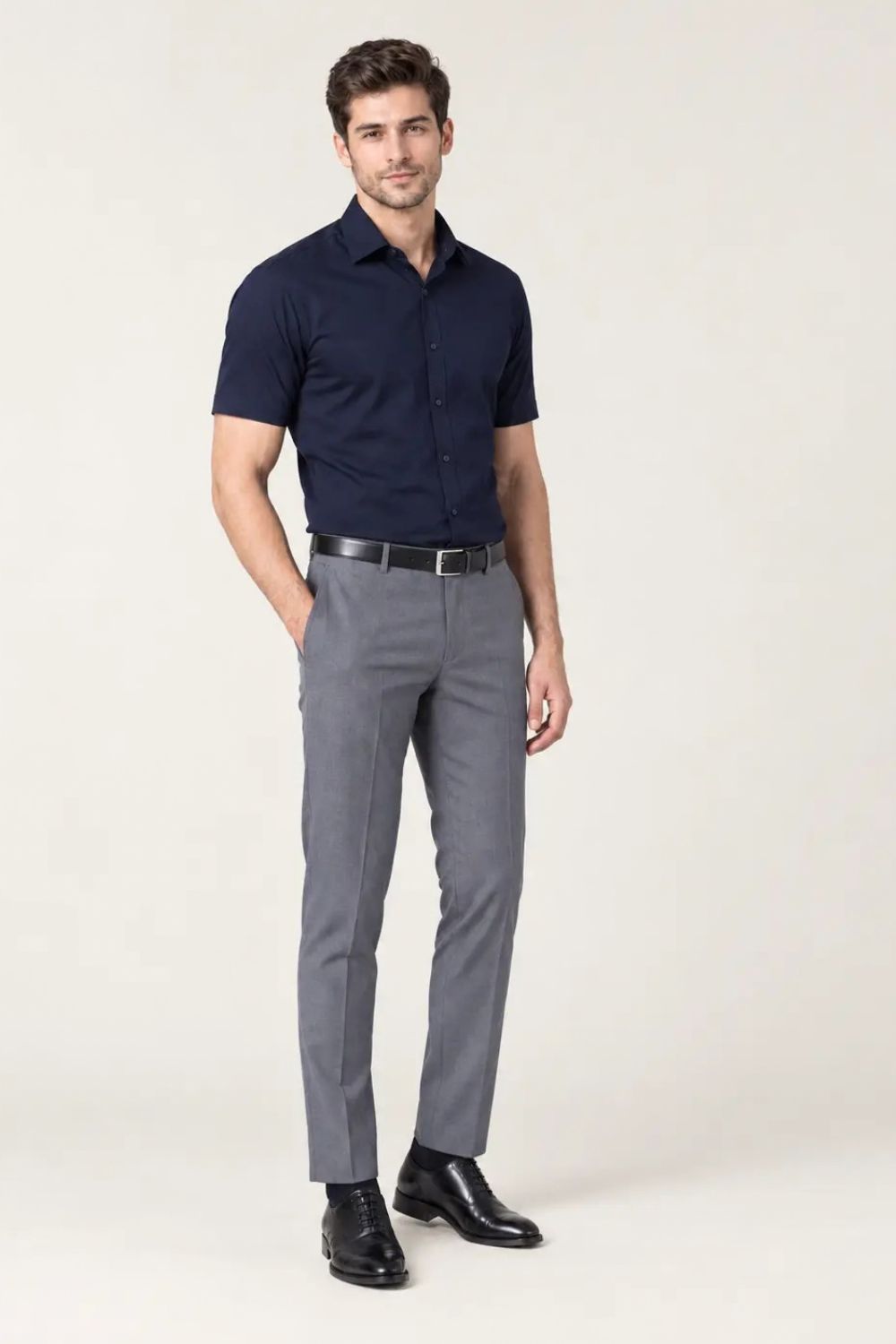
True Navy shirt with Roman Grey pants for a modern, soft-contrast office outfit
-
Berry Wine shirt with Steel Grey pants for an evening look that stays understated
Go carefully with: strong yellow-orange shades such as Bright Mango and Terracotta Rust. On some cool complexions they can make the skin look flushed. Pair them with a neutral pant and keep the rest of the outfit quiet.
Styling tips:
-
Cool undertones usually look best with bright whites and cool greys.
-
A silver watch and black leather shoes fit the same palette.
Neutral and Olive Undertones: The Flexible Middle
If you landed in the middle, you have the widest range. Both warm and cool colours can work for you, so the question is less "what will clash?" and more "what suits the occasion?"
Shirt colours that tend to flatter:

-
Crisp White, the all-purpose choice
-
Laurel Green, a muted sage that sits comfortably between warm and cool

-
Jet Black for evenings and high contrast
-
Magic Maroon, Baby Pink and True Navy are also strong choices
Three outfit ideas for neutral undertones:
-
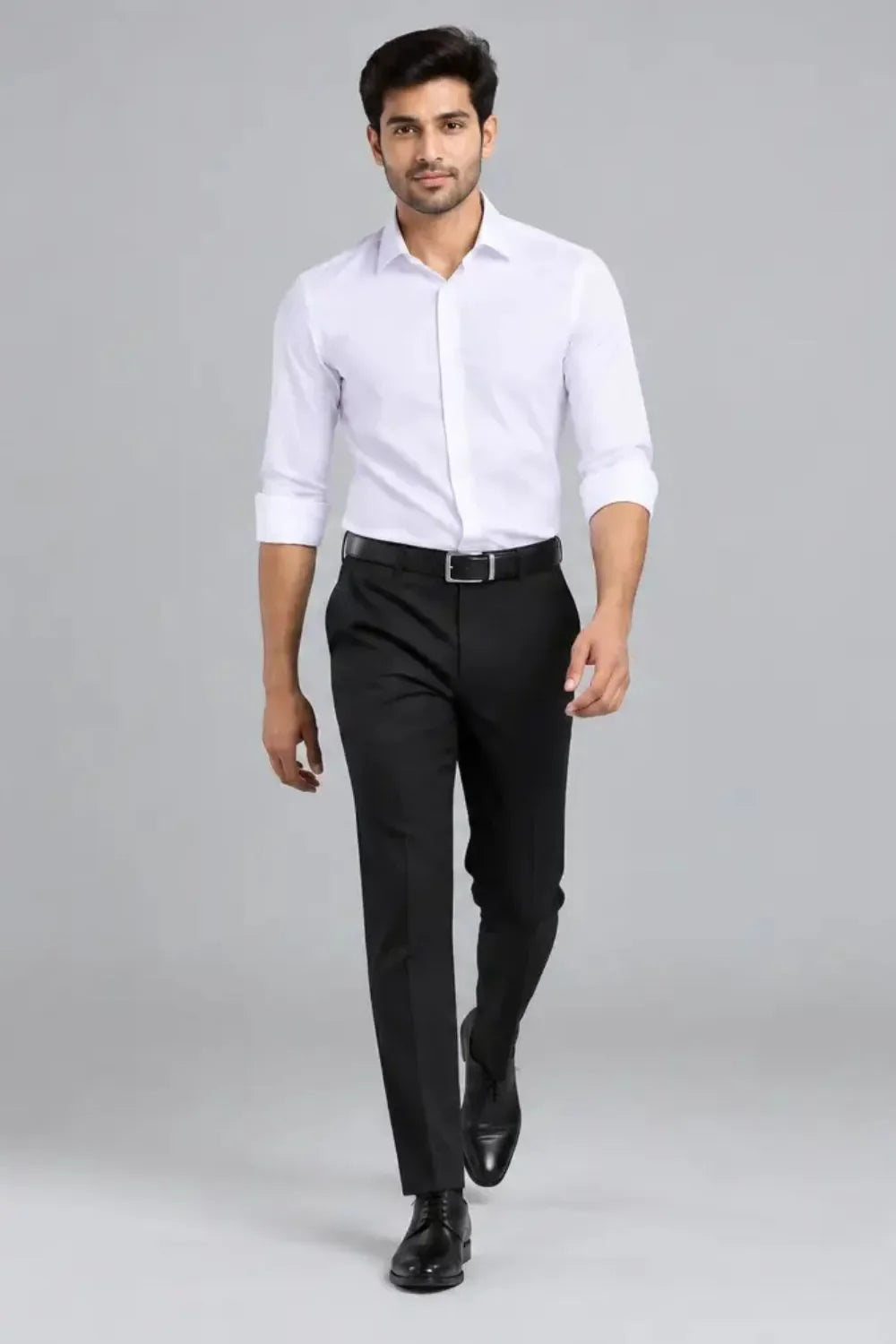
Crisp White shirt with black pants for interviews and formal meetings
-
Laurel Green shirt with grey pants for a modern smart-casual look
-
Magic Maroon shirt with black pants for festive evenings
Styling tip: Neutral doesn't mean everything works equally well. Skin depth still matters (see below), and so does whether the colour suits the setting.
Quick Reference: Undertone and Shirt Colours
|
Undertone |
Colours that tend to flatter |
Test before buying |
|
Warm |
Terracotta Rust, Camel Brown, Ripe Olive, Coffee Brown, Bright Mango, Light Salmon, Beige |
Pastel Blue, Lazy Lavender |
|
Cool |
Steel Blue, True Navy, Berry Wine, Pearl Grey, Clear Grey, Pastel Blue, Lazy Lavender, Deep Teal |
Bright Mango, Terracotta Rust |
|
Neutral / Olive |
Crisp White, Laurel Green, Jet Black, Magic Maroon, Baby Pink, True Navy |
Very few, so go by occasion |
These groupings are styling guidance, not hard rules. Always check a colour against your own face in daylight.
Undertone Is Half the Answer: Skin Depth Matters Too
Undertone tells you which colours belong with your skin. Skin depth decides how much contrast a colour creates. Use both together.
- If your skin is fair, start with our guide to the best shirt colours for fair skin tone Indian men, then use your undertone to choose between the options.
- If your skin is deeper, see our guide to the best formal shirt colours for dark skin tone men, then use your undertone to fine-tune.
- If you’re somewhere in between, our guide to shirt and pant combinations for Indian skin tones is a good starting point.
Which Shirt for Which Occasion?
Once you know your undertone, use this table to choose by occasion. Half sleeve shirts are available in a smaller range of colours, so check the half sleeve collection for what's in stock.
|
Occasion |
Warm |
Cool |
Neutral |
|
Interview |
Crisp White, True Navy |
Crisp White, Steel Blue |
Crisp White, True Navy |
|
Client meeting |
Camel Brown, Ripe Olive |
Steel Blue, Pearl Grey |
Laurel Green, True Navy |
|
Festive / evening |
Terracotta Rust, Bright Mango |
Berry Wine, Magic Maroon |
Magic Maroon, Jet Black |
|
Casual Friday (half sleeve) |
Ripe Olive, Beige, Light Salmon |
Pastel Blue, Pearl Grey, Berry Wine |
Laurel Green, True Navy, Crisp White |
A Sample 5-Shirt Rotation for Each Undertone
If you're building your work wardrobe from scratch, start with five shirts. Pair them with two or three neutral pants and you'll have around 15 different outfits.
|
Undertone |
Your five shirts |
|
Warm |
Crisp White, True Navy, Camel Brown, Terracotta Rust, Ripe Olive |
|
Cool |
Crisp White, Steel Blue, True Navy, Pearl Grey, Berry Wine |
|
Neutral |
Crisp White, Jet Black, Laurel Green, True Navy, Magic Maroon |
If you'd rather not match every pant yourself, our Signature Combo collection has 28 pre-matched shirt and pant pairings.
What About the Pants?
Undertone matters most for whatever sits near your face, so the shirt collar does most of the work. Your pants are far more forgiving. Charcoal, black, grey and beige all go with nearly any shirt. The bigger decision is contrast: a darker pant lets a light shirt stand out, and a lighter pant lets a deep shirt stand out.
Fit and Fabric: The Other Half of Looking Sharp
The right colour won't help if the shirt is creased by 3 pm. Our shirts are made from wrinkle-free, 4-way stretch fabric that holds its shape through long workdays, and they come in sizes 38 to 52. They also come with free shipping, COD and a 15-day exchange and return window, so you can try a new colour with low risk.
Not Sure? Let Manatomy AI Help
If the tests above give you mixed answers, there's a shortcut. Upload a photo to Manatomy AI and see colour suggestions picked for you.
7 Mistakes Men Make When Choosing Shirt Colours
-
Buying a colour because a friend looks good in it. Their undertone isn't yours.
-
Judging colour under shop lighting. Check it near a window.
-
Ignoring depth. A colour can match your undertone and still be too close to your skin tone to show up.
-
Assuming "safe" colours are always flattering. White and grey are versatile, but they aren't automatically your best colours.
-
Treating the rules as laws. If you love a colour that's "wrong" for your undertone, wear it with a neutral pant and see how it looks.
-
Testing with one shirt only. Compare at least three colours side by side against your face.
-
Forgetting fabric and fit. A well-fitted, wrinkle-free shirt in an average colour often beats a badly fitted one in a perfect colour.
Build Your Shirt Rotation Around Your Undertone
Choose two or three colours from your undertone group, then add Crisp White and one deep neutral. That gives you a rotation that works for the office, interviews and evenings out. Browse the full formal shirts collection to put it together.
FAQs: Skin Undertone and Formal Shirt Colours
Q1. How do I know if I have a warm or cool undertone?
Try the vein, jewellery, white-versus-cream and mirror tests in natural daylight. Greenish veins and gold jewellery suggest warm. Blue or purple veins and silver jewellery suggest cool. Mixed results suggest neutral.
Q2. What shirt colours suit a warm undertone?
Earthy shades such as terracotta, camel brown, olive, mango and beige tend to work best.
Q3. What shirt colours suit a cool undertone?
Blues, navy, cool greys, lavender, teal and wine shades tend to flatter cool undertones.
Q4. What if I have a neutral undertone?
You can wear most colours. Choose by occasion and skin depth rather than undertone.
Q5. Is undertone the same as skin tone?
No. Skin tone is the surface depth of your skin. Undertone is the subtle colour beneath it, and it doesn't change with a tan.
Q6. Can I still wear a colour that doesn't match my undertone?
Yes. Pair it with a neutral pant, keep accessories simple, and check how it looks in daylight. These are guidelines, not rules.
Q7. Which formal shirt colour works for almost everyone?
Crisp white is the most universal, followed by navy and charcoal-leaning greys.
Q8. Do Indian men usually have warm undertones?
Many lean warm or olive-neutral, but cool and neutral undertones are common too. The tests above are more reliable than assuming.
Q9. Does my undertone change as I age or tan?
Your skin tone can change with sun exposure and age. Your undertone generally stays the same.
Q10. How many formal shirts should I own?
A rotation of five covers a working week. Choose colours from your undertone group, add white and one deep neutral, and pair them with two or three neutral pants.